There are two different aspects of what we like to call art. First there is learning and improvement of traditional artistic craft. Second there is the reflection on art as a social phenomena. These two aspects are at the same time interwoven und independent from each other. The craft receives its goals and values from theory. Even if the artistic process has no expectations towards its results and is highly participative, when questions of author and oeuvre are eliminated, it is thereby determined by the results of a free and deliberate theoretical reflection. On the other hand while executing the craft arise new problems, questions and solutions that could not have been foreseen by theory. This is as well the source of the craft’s autonomy as the possibility for creativity. Theory itself moves in analogous ways. It is founded on the material results, or residuals, of practical craft. The web of interpretation and meaning is rooted in these residuals. But the web incorporates, while unfolding, other aspects of contemporary social life that are independent from the residuals. The theoretical social aspects and material results of craft can be connected to each other in a logical and harmonious way. The autonomy of theory lays in the independent selection of the aspects that it tries to connect to the craft. Whether or not there is an inner relation or similarity and a connection somehow fruitful is proven during the development of theoretical reflection. So comes that theory and practice are deeply interwoven and at the same time claim to be the autonomous source for the other.
Author: Robert Ries
-
Notes #5
The intentional creation of meaning as a meaningful social practice: There are objects that primarily refer to themselves before speaking of more. I.e. they reflect the act of their creation, the means and materials of creation, the intention of creation or their contents. Examples might be Malewitsch’s Black Square, non figurative Action Painting or Minimal Art/ Arte Povera.
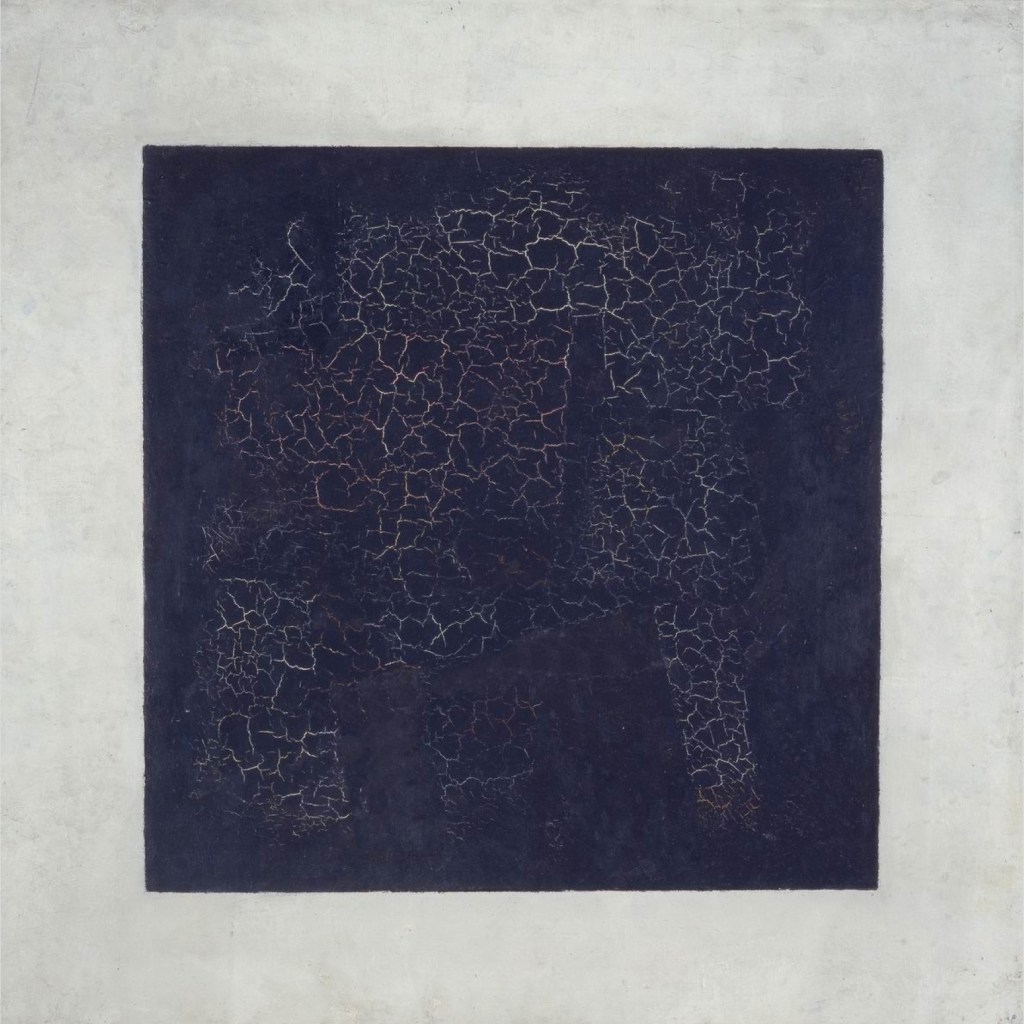
Kasimir Malewitsch – Black Square (1915) 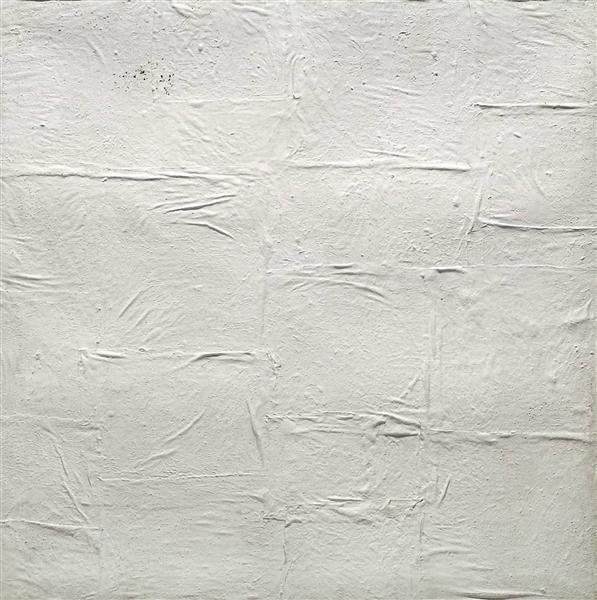
Piero Manzoni – Achrome (1958)
In contemporary museums, galleries or art school exhibitions there can also be made the discovery of objects “refering” to something that lays beyond them. They work as an index and are characterised by the external attribution of meaning to themselves: they require a subtext to become “meaningful”. Also they attribute meaning to something else: because they exist, they declare something else as “meaningful”. Thus they are characterised by the missing nexus between inner form and meaning. Whilst oberserving them it remains unclear how form and meaning interact and a different meaning could always be attributed to the material without raising any suspicion. For example the Fountain by Duchamp refers to the arbitrariness of meaning in art, or to gender issues by displaying a closet that cannot be used by females, or to the domination of modern life by industrially shaped objects or to the arbitrariness of the author by being signed with R. Mutt. There are less radical examples to this, such as most of religious art that is refering to a web of stories beond the material representation.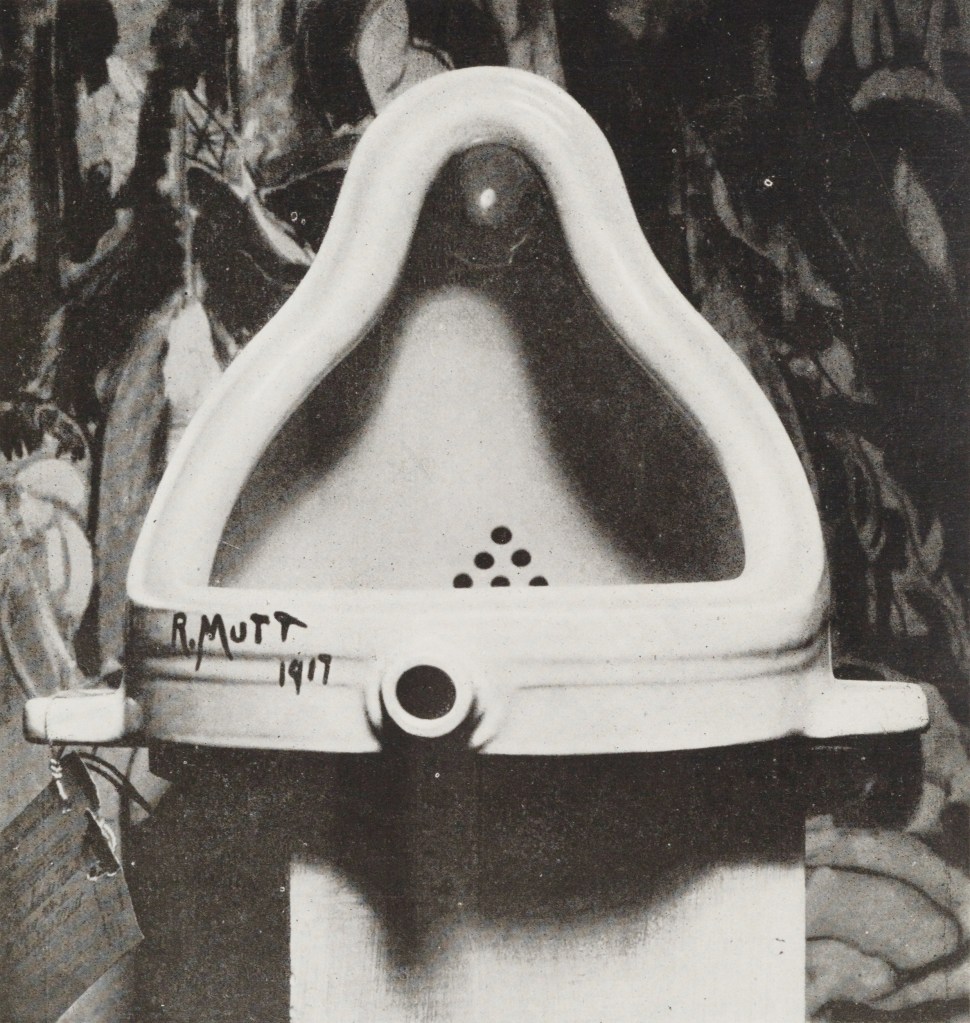
Marcel Duchamp – Fountain (1917) 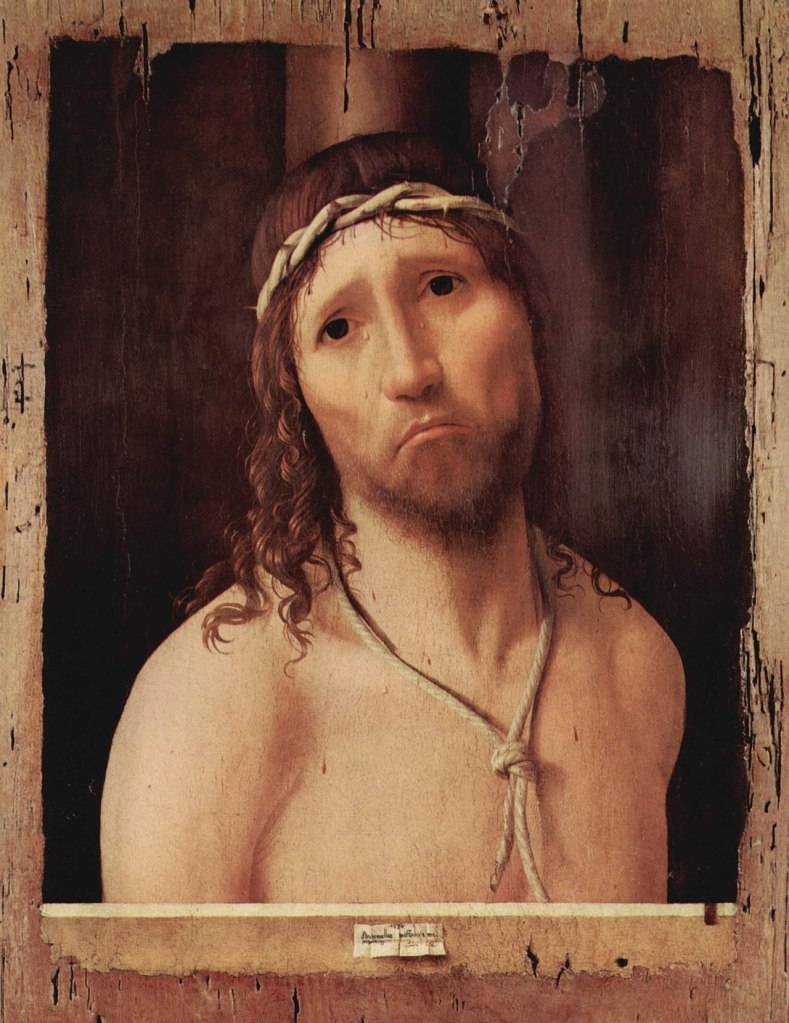
Antonello da Messina – Ecce Homo (1473)
… not just a sad man … -
Notes #4
Paul Feyerabend wrote: “Anything goes”. Thereby, he was referring to the fact that the axioms of science have always been changing and that the history of science is the demonstration of how science itself is socially moderated. There are no ultimate axioms and science is always contemporary. The same applies to art. There are no criteria for the successful creation of art or its final definition.
But living today, thus being contemporary, creates the obligation of adressing contemporary issues. The meaning of art could be described as the sum of the issue’s relevance and the depth of its development. But it should rather be described as the way the meaning has been described – until today. Because there is no security that it will be described like this in the future. Therefore it will never be possible to calculate artistic relevance and meaning. The bare attempt makes the result turn into a cheap copies. In accordance to “anything goes” the axiom’s future is uncertain. Looking for them may for certain moments even become the only issue of art. What may seem troubling at first is also the basis of freedom. There is no art per definitionem, neither is there an artist’s biography per definitionem. Everything is open all the time and undecided – in both ways. -
Notes #3
The hand is considered to be the ultimate tool, because of its ablility to use all the other ones. Since humanity is really committed to make the body as well as the mind obsolete in everyday life the question of which tools we use becomes more and more relevant. Artistic practice itself is always confronted with this problem even though it is seldomly made explicit. Far too often artists ignore the technical side of their activity, thus unproportionally emphasising the expressive function of art. But the manner how something is said is as important and as political as what is actually said.
At the same time there is no clear answer, no right way of speaking. It is as valid to use antique methods and to perform a painting with bare hands on a wall as to make 3D prints out of AI generated data. The work can be considered successful as long as the tools used are reflected within the process and its result. Methodology can relate to the reported content.
Art and beauty are arbitrary. this cannot be ignored by artists for which reason they have to take a stance towards their arbitrariness and the arbitrariness of our relationship towards the world. In taking a stance they have to be clear and consequent – neither logical, nor conform. -
Notes #2
A phenomenological analysis of Europe – understood as a political idea – what would it consist of?
In spring, I have been taking photos on the German – French border next to Saarbrücken (Bliesbrück and Goldene Bremm to be precise). I walked around in the empty space between the two states, observing and recording. The border is invisible but it surely exists. It creates a unique type of space that is different from the two entities who are separated by the border itself. That means consequently that France and Germany aren’t touching each other but are rather separated by a broader border region. In this region, characteristics of the two states are distorted and mixed together in an unknown and unregulated manner. The region is an intermediary third that can be accessed from both sides as a subject of cognition. Speaking of borders therefore means speaking of a shared space and uncovering, within and through the own discurse, the individual perspective on that space. -
Notes #1
When we speak of right and wrong, we actually say “congruent or incongruent to a certain set of criteria”. These sets of criteria may be explicit (for example written laws) or implicit (for example personal emotions); in every case they are shared by a bigger or smaller social cells, where the individual is the smallest possible entity. Finding acceptance for a judgement requires its expression towards someone who belongs to the same social group and follows the same reasoning/ interpretation (not considering the “random” approval by someone from a different group, whose set of criteria delivers for this specific situation the same result).
Some circumstances aren’t open for discussion, such as gravity, the rythm of day and night and the different seasons, reproduction, birth and death and some others. Refering to those “eternal truths” we create a system of belief and its very first sentences already determine our moral and judgement. Religion is an attempt to answer questions of origin and nature. The supposed existence of a creator introduces in the very same moment of its establishment the idea of something bigger, wiser and mightier than ourselves. Concepts like salvation or innocence heavily rely on this concept. While we have moved to a more individualistic conception, where philosophy of mind and intentionality have gained ground, innocence is nonexistent. Only its substantial core (being uncontested in ones actions) remains intact, even though we now use expressions like “self-fulfilment” or “pursuit of happiness”.
Can we even relate to what “innocence” must have meant to people in the middle ages? Can we even translate it to our present vocabulyary? Therefore, we would need to know the premises of ancient belief systems, but they remain invisible.
Modern nation states are trying to provide fields of action for numerous protagonists with their individual sets of criteria. Late 19th century laizism is the attempt to integrate catholics, protestants and constitutionalists into the same social group by providing a different, superior set of criteria for each judgement. The fear of violence (and in last consequence of prison) is a heuristic shortcut that substitutes the belief in the concept. -
Début
Everything important has already been said and the question is now how the meanings are arranged. The order needs to be sustainable and peaceful.
Jean Monnet said, at the end of his carreer, that the next time he will have to promote European integration, he will rather opt for a cultural path than an economic one.
In October 1945 Erno Kallai, Pal Kiss, Arpad Mezei, Imre Pan and Lajos Kassak published the manifesto of the European School in Hungary:
“Europe and the old European ideals lay in ruin. Until now, the term ‘European ideal’ meant a Western European ideal. From now on, we must consider the entire Europe. The New Europe could be built as a synthesis of the East and the West. In 1945 AD everyone must decide whether to participate in realising the idea of ‘being a European’. We must create a vital European art, one that will describe a new relationship to life, to an individual, and to a society. That objective characterises the activities of the European School. This goal serves as a guiding light for our public lectures, exhibitions and publications. We seek the philosopher’s stone, knowing full well that such a stone is not a chemical substance, but a living idea that can come into being only through the efforts of an individual and a society.”
From ‘Selim oder die Gabe der Rede’: “He who speaks never just expresses the meaning of his words but also his own meaning – he is telling his own story in the very same motion. He shouldn’t be afraid of but rather embrace and seek this transparency. Only then he will find attention, more: his attitude elevates the content.”
 Ithaka